
Table of Content
- FAQ 1: What are the most common failure modes during plate heat sealing?
- FAQ 2: How can you determine whether a sealing film has achieved an acceptable seal?
- FAQ 3: Can excessively high heat-sealing temperatures affect PCR reactions?
- FAQ 4: How can you prevent excessively high heat-sealing temperatures from affecting PCR reactions?
- FAQ 5: How often should the heating plate of a plate heat sealer be maintained?
- FAQ 6: Can samples be frozen immediately after thermal sealing?
- FAQ 7: Do different types of microplates require different heat-sealing parameters?
- FAQ 8: Why does the same plate heat sealer perform differently across different experiments?
- FAQ 9: What are the key differences between heat sealing deep-well plates and PCR plates?
- FAQ 10: What potential risks are associated with mixing sealing films from different brands?
- FAQ 11: What typically causes a decline in sealing consistency after long-term use?
- FAQ 12: Is heat sealing suitable for experiments that require frequent plate opening and sampling?
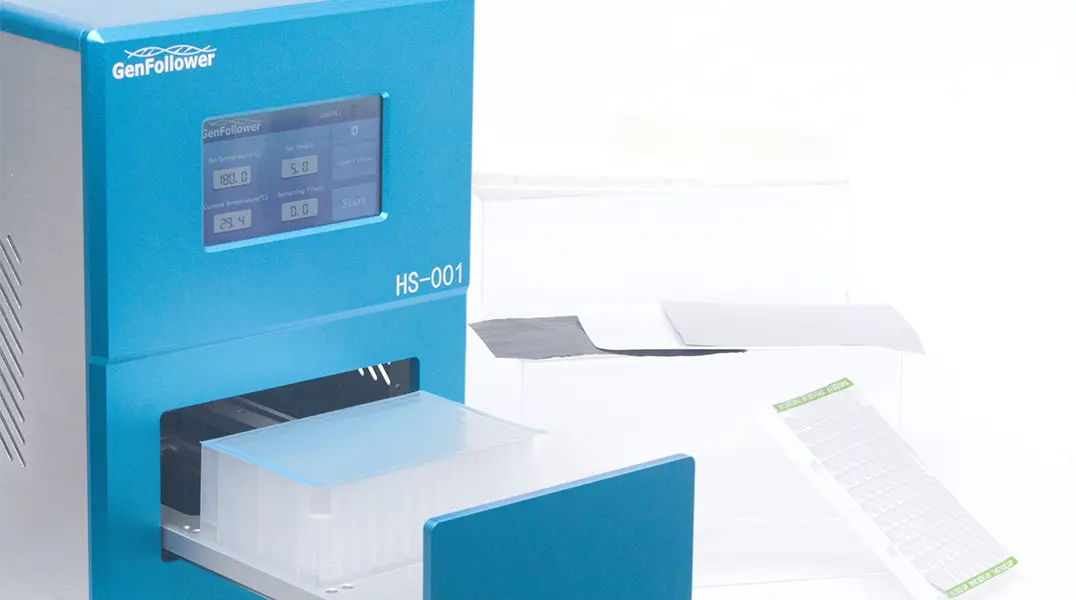
Plate heat sealers are widely used in laboratories to protect samples from evaporation, leakage, and contamination. However, in daily use, many labs encounter recurring issues—inconsistent seals, unclear parameter settings, compatibility questions, or unexpected sealing failures—despite using standard equipment and consumables. This FAQ-based article addresses the most common and practical questions laboratories and distributors ask about plate heat sealing, focusing on real-world operation, reliability, and long-term use rather than product specifications alone.
FAQ 1: What are the most common failure modes during plate heat sealing?
In laboratory practice, most plate heat sealing failures are not caused by equipment defects, but by mismatches between parameters, materials, and application scenarios. The most common issue is insufficient sealing, where temperature, pressure, or dwell time is too low for the specific combination of plate material and sealing film. This often leads to gradual evaporation or micro-leakage rather than immediate, visible failure.
Another frequent failure mode is over-sealing. Excessive heat or prolonged sealing time can deform the plate rim, damage the sealing film, or make the seal difficult to peel. While the seal may appear strong, over-sealing can compromise plate integrity and downstream handling, especially for PCR or automation workflows.
Material incompatibility is also a recurring problem. Different plate polymers and sealing films have distinct thermal response windows, and using a “compatible” film without optimizing parameters can still result in inconsistent seals across wells. Finally, uneven heat distribution or plate alignment issues—often caused by worn heating surfaces or improper placement—can produce partial seals that are difficult to detect until samples are stored or transported.
Understanding these failure modes helps laboratories adjust parameters more effectively and avoid recurring sealing problems without unnecessary equipment changes.
FAQ 2: How can you determine whether a sealing film has achieved an acceptable seal?
In laboratory settings, an acceptable heat seal should be verified through simple, repeatable checks, not just visual inspection. A practical first step is a manual peel test. When peeling the film from the plate, resistance should be continuous and uniform across all wells. If the film lifts easily in certain areas, tears unevenly, or detaches locally before full peeling, the seal should be considered insufficient or inconsistent.
For liquid-containing plates, a short stress test is strongly recommended. After sealing, briefly centrifuge the plate or invert it for several minutes, then inspect for leakage around the well rims. Any visible liquid migration or condensation between wells indicates sealing failure, even if the film appears intact.
Evaporation performance can be assessed by time-based comparison. Seal two identical plates under the same conditions, incubate or store them for a defined period, and compare volume loss or concentration changes against an unsealed or improperly sealed control. Noticeable variation suggests that sealing parameters require adjustment.
Finally, consistency across the plate is critical. If edge wells behave differently from center wells, this often points to uneven heat distribution or plate alignment issues, rather than film quality alone. A seal should be considered “qualified” only when it remains stable and predictable under the actual handling, storage, and experimental conditions it is intended for.
FAQ 3: Can excessively high heat-sealing temperatures affect PCR reactions?
Yes. Excessively high heat-sealing temperatures can negatively affect PCR workflows, even if the seal itself appears strong. The primary risk is localized thermal stress at the well rim, which may lead to slight plate deformation or changes in well geometry. While these effects are often subtle, they can influence reaction volume consistency and thermal uniformity during PCR cycling.
High sealing temperatures can also accelerate evaporation before the seal is fully formed, particularly if dwell time is extended. This may result in unintended concentration changes of PCR reagents, which is especially problematic for low-volume reactions. In addition, over-sealing can make films difficult to peel, increasing the risk of aerosol generation or sample disturbance when opening plates.
For PCR applications, sealing temperature should be kept within the validated range of both the plate material and the sealing film, rather than maximized for seal strength. A stable, reproducible seal that preserves reaction conditions is more critical than achieving the strongest possible bond. Parameter optimization should therefore focus on the lowest temperature that delivers consistent sealing performance under the intended PCR workflow.
FAQ 4: How can you prevent excessively high heat-sealing temperatures from affecting PCR reactions?
To avoid negative impacts on PCR reactions, the key is to control sealing temperature within a defined and reproducible window, rather than aiming for maximum seal strength. Start by setting the sealing temperature at the lower end of the sealing film’s recommended range, then increase incrementally only if sealing defects are observed. This approach minimizes unnecessary thermal exposure at the well rim.
Equally important is optimizing dwell time instead of temperature. In many PCR applications, slightly longer sealing time at a moderate temperature produces more stable results than brief exposure at high temperature. This reduces the risk of plate deformation and reagent concentration changes.
Material matching should also be verified. Use sealing films specifically validated for PCR plates and low-volume reactions, as these films typically achieve reliable seals at lower temperatures. After parameter adjustment, confirm performance using a post-sealing PCR control run, comparing amplification efficiency or Ct values against unsealed or optimally sealed references.
In practice, a reliable PCR sealing setup prioritizes parameter consistency and repeatability, ensuring that thermal exposure during sealing does not become a hidden variable in PCR performance.
FAQ 5: How often should the heating plate of a plate heat sealer be maintained?
The heating plate should be inspected on a regular, use-based schedule rather than at fixed calendar intervals. For laboratories running daily or high-throughput sealing, a basic inspection is recommended weekly, while low-frequency users can typically perform checks monthly. The goal is to identify surface contamination or wear before it affects sealing uniformity.
Routine maintenance primarily involves keeping the heating surface clean and flat. Residual adhesive, melted film material, or debris can interfere with heat transfer and lead to uneven seals. Cleaning should be performed only after the plate has cooled, using non-abrasive wipes and solvents approved by the equipment manufacturer.
In addition to cleaning, laboratories should periodically check for temperature stability and uniformity, especially if sealing performance becomes inconsistent or edge wells fail more frequently than center wells. Any visible damage, persistent residue, or unexplained temperature deviation indicates that maintenance or service is required sooner rather than later.
Regular, simple maintenance of the heating plate helps preserve sealing consistency and reduces the risk of gradual performance degradation that may otherwise go unnoticed in routine workflows.
FAQ 6: Can samples be frozen immediately after thermal sealing?
While the convenience of rapid laboratory workflows often suggests a direct transition from the heat sealer to the freezer, immediate freezing is generally discouraged by experts to preserve both the integrity of the seal and the stability of the sample. The primary concern lies in the thermal shock and the physical dynamics of the sealing interface. When a microplate is freshly sealed, the adhesive or plastic laminate remains in a semi-fluid or “set” phase; introducing this plate to sub-zero temperatures prematurely can cause the seal to contract at a different rate than the plate itself. This differential thermal contraction often leads to micro-fissures or “edge-leaks,” compromising the hermetic environment required for long-term storage.
Furthermore, the residual heat from the sealing process—which typically ranges between 150°C and 180°C at the point of contact—can create a localized temperature gradient within the wells. If the plate is frozen before this heat dissipates, the resulting “flash-cooling” effect may induce unintended cryo-precipitation or denature sensitive biological analytes near the surface. To ensure a robust, fail-safe barrier, labs should allow the plate to equilibrate to room temperature for at least 30 to 60 seconds. This brief normalization period allows the polymer chains in the sealing film to fully cross-link and stabilize, ensuring that the seal remains resilient against the extreme expansion and contraction forces encountered during subsequent cryogenic storage or freeze-thaw cycles.
FAQ 7: Do different types of microplates require different heat-sealing parameters?
Yes. Different microplate types almost always require different heat-sealing parameters, even when the same heat sealer and sealing film are used. The primary reasons are plate material, plate thickness, well geometry, and intended application, all of which affect how heat is transferred and how the sealing film bonds to the plate rim.
From a material standpoint, polypropylene (PP) PCR plates, deep-well plates, and cell culture plates respond differently to heat. Thin-wall PCR plates typically seal effectively at lower temperatures and shorter dwell times, because excessive heat can deform the rim or affect reaction volumes. In contrast, deep-well plates often require higher temperature or longer dwell time due to thicker rims and greater thermal mass.
Plate geometry also plays a role. Plates with skirted designs, reinforced rims, or raised well edges may need parameter adjustments to ensure uniform contact between the film and the plate surface. Using parameters optimized for one plate type on another often results in partial sealing, over-sealing, or inconsistent edge-well performance.
To establish reliable settings, laboratories should treat each plate type as a separate validation case. Start with the sealing film’s recommended range, then fine-tune temperature and dwell time using simple leakage and peel tests under real workflow conditions. Once validated, parameters should be documented and reused consistently for that specific plate–film combination, rather than assumed to be transferable across different microplate types.
FAQ 8: Why does the same plate heat sealer perform differently across different experiments?
FAQ 9: What are the key differences between heat sealing deep-well plates and PCR plates?
FAQ 10: What potential risks are associated with mixing sealing films from different brands?
Using sealing films from different brands can introduce unpredictable sealing performance, even when the films are labeled as compatible with the same plate types. The primary risk lies in differences in material composition, adhesive formulation, and thermal response, which directly affect the temperature and dwell time required to achieve a stable seal.
One common issue is narrow or mismatched sealing windows. A heat-sealing parameter set optimized for one brand of film may result in under-sealing or over-sealing when applied to another, leading to inconsistent peel strength, partial well coverage, or increased evaporation. These issues often become apparent only after storage, incubation, or centrifugation.
Another risk involves process consistency and troubleshooting difficulty. When multiple film brands are used interchangeably, it becomes harder to trace the root cause of sealing failures, as performance variation may be attributed incorrectly to the heat sealer or plate quality. For laboratories and distributors, this can increase repeat testing, downtime, and support burden.
To minimize risk, sealing parameters should be validated separately for each film–plate combination, and routine workflows should avoid mixing brands unless equivalence has been confirmed through practical testing. Consistency in consumables is often as critical as equipment stability in achieving reliable heat sealing results.
FAQ 11: What typically causes a decline in sealing consistency after long-term use?
A gradual decline in sealing consistency is most often related to equipment wear, surface contamination, or process drift, rather than sudden equipment failure. One of the most common causes is residue buildup on the heating plate, such as adhesive traces or film material, which interferes with uniform heat transfer and leads to uneven sealing across the plate.
Over time, thermal cycling of the heating plate can also result in minor changes to temperature uniformity or calibration accuracy. Even small deviations may disproportionately affect edge wells or certain plate types, creating the impression of inconsistent performance. If sealing parameters remain unchanged while performance degrades, temperature verification should be prioritized.
Process-related factors also contribute. Changes in consumable suppliers, plate designs, or sealing film batches, even if considered equivalent, can alter sealing behavior if parameters are not revalidated. Additionally, gradual shifts in operator handling—such as plate placement or sealing frequency—can introduce variability that accumulates over time.
Maintaining long-term sealing consistency requires routine inspection, periodic parameter verification, and controlled use of consumables. Addressing these factors early helps prevent progressive performance degradation that may otherwise be mistaken for unavoidable equipment aging.
FAQ 12: Is heat sealing suitable for experiments that require frequent plate opening and sampling?
Heat sealing is generally not the optimal solution for workflows that require frequent opening and re-sealing, but it can be appropriate under specific conditions. Heat-sealed films are designed to provide strong, continuous seals for sample protection during incubation, storage, or transport, rather than repeated access to individual wells.
For experiments involving multiple sampling steps, repeated peeling of heat-sealed films increases the risk of seal damage, uneven re-sealing, and sample disturbance, particularly if the film is not designed for multiple peel cycles. Each re-sealing step may also introduce variability in sealing strength and increase the likelihood of contamination or evaporation.
However, heat sealing can still be used effectively in such workflows if peelable sealing films are selected and sealing parameters are optimized to balance seal integrity with peelability. In these cases, laboratories should validate how many peel–reseal cycles the system can tolerate without compromising sample integrity.
In practice, if frequent access is a core requirement, alternative closure methods—such as reusable caps or adhesive films—may provide greater operational flexibility. Heat sealing is best suited for workflows where extended sealing stability is prioritized over repeated access.
Recent Posts
Cell Cryopreservation: Common Protocols, Thawing Tips, and FAQs
Imagine this scenario: You’ve spent months carefully cultivating a unique cell line or editing a specific gene. The data looks promising, and it’s time to bank these precious samples for future verification. You freeze [...]

Comprehensive Analysis of Lab Automation Workstations: Mainstream Brand Selection Guide
Let’s face it: nobody becomes a scientist because they love pipetting 384-well plates by hand. It is tedious, physically draining, and—worst of all—prone to human error that can quietly ruin weeks of hard work. [...]

Fast Guide to Robotic Pipetting and Robotic Pipette Tips
Robotic pipetting has transformed modern labs by automating repetitive liquid transfers with speed and precision, and the choice of robotic pipette tips is central to that performance. A robotic pipette tip is far more [...]