
Table of Content
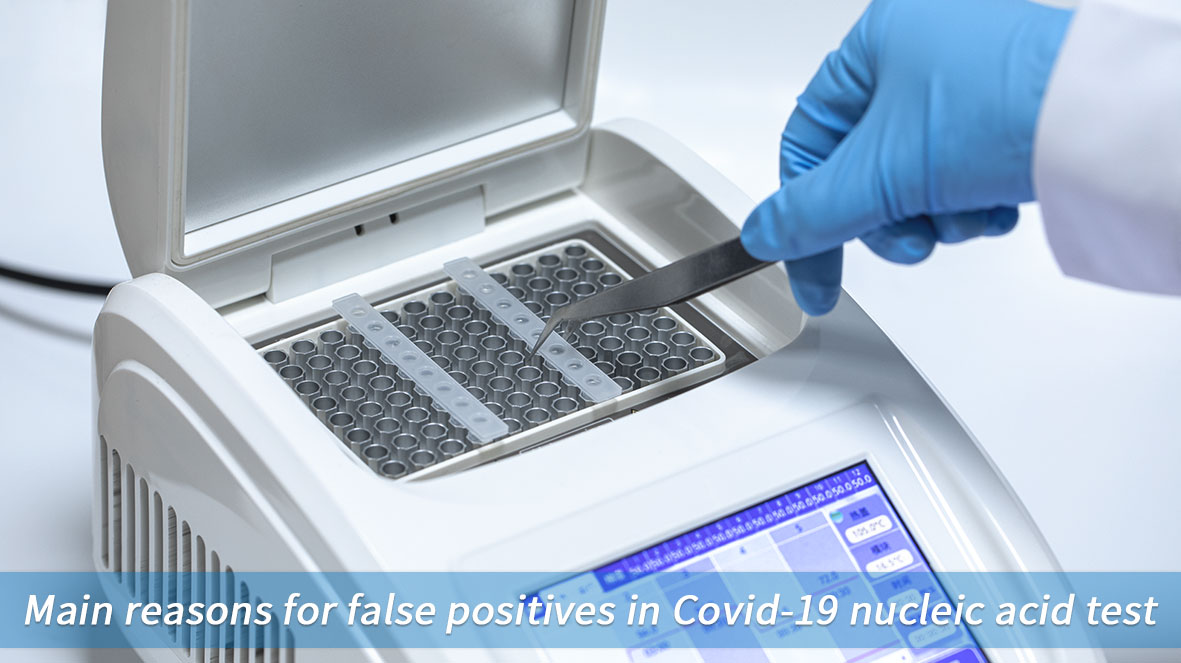
There are occasional false positives in COVID-19 Nucleic Acid tests. In addition to the contamination during the sampling process, what other factors could lead to “false positives” in the laboratory testing process?
There are mainly the following factors:
1. Inappropriate primer design
The selected amplification sequence has homology with the non-target amplification sequence, so the amplified PCR product is the non-target gene sequence during PCR amplification. However, inappropriate primer design does not happen normally in clinical practice, since the basic use of finished kits. Nevertheless, there are still non-specific amplifications in the reagents of a few manufacturers. It is better to have performance evaluation and comparison screening before use.
2. Cross-contamination of target sequences or amplification products
There are two reasons for this contamination, the first is cross-contamination of the whole genome or large segment leading to false positives. The second is the pollution of a small segment of nucleic acid in the air. Although these small segments are shorter than the target gene sequence, they have some homology. They could be combined with primers after splicing with each other to amplify PCR products, and resulting in false positives. The second situation needs to be avoided as much as possible, under the premise of standardized operation.
3. Cross-contamination between specimens
Specimen contamination mainly includes the contamination of the container for collecting specimens, or the cross-contamination of the container caused by the loose sealing outside the container or the specimen sticking outside the container; In the process of extracting nucleic acid template, the contamination between samples is caused by sampling gun; Some microbial specimens, especially viruses, could spread with or form aerosols, leading to contamination of one another.
4. PCR reagent contamination
The main reason is that in the preparation process of PCR reagent, sample gun, container, double steaming water and other solutions were contaminated by PCR nucleic acid template.
5. Contamination of clone plasmids in laboratory
The positive control in the kit is involved in the nucleic acid extraction process, resulting in cross-contamination. In order to monitor the quality of the nucleic acid extraction process, some kits require that the positive control (fake virus containing the target gene) in the kit be extracted along with the sample. Due to the heating, vibration and other processes of the automated nucleic acid extractor, aerosols may contaminate the extractor during operation.
Some laboratories may store the extracted nucleic acid sample plates with membranes for amplification, and cross-contamination may occur when the membrane-sealed sample plates are opened again. Therefore, it is better to test extracted nucleic acid samples immediately, rather than preserve them by sealing the film. At the same time, each batch of extracted instruments need to be wiped with 75% alcohol.
Recent Posts
Common Contamination Source Issues in Microbiology Labs
In day-to-day microbiology work, contamination is often recognized not through a single dramatic failure, but through recurring, difficult-to-explain inconsistencies. Plates that were clean in previous runs begin to show unexpected colonies, negative controls occasionally fail, [...]

Why Are Serological Pipettes Designed This Way? Design Logic and Common Misunderstandings
Serological pipettes are part of everyday life in many laboratories. Whether transferring culture media, handling large liquid volumes, or supporting routine cell culture work, they are often picked up almost without thinking. Their shape, [...]
Plate Heat Sealer FAQs: What Often Goes Wrong and How Labs Fix It
Plate heat sealers are widely used in laboratories to protect samples from evaporation, leakage, and contamination. However, in daily use, many labs encounter recurring issues—inconsistent seals, unclear parameter settings, compatibility questions, or unexpected sealing [...]