

Sample weighing is a critical component of analytical experiments, as inaccuracies can lead to the failure of the entire process. When weighing results are consistently inaccurate, it is essential to perform a thorough analysis of the underlying causes. Generally, inaccuracies in laboratory sample weighing can be attributed to three primary factors: uncalibrated analytical balances, environmental and physical factors related to the sample, and improper operational techniques. Therefore, troubleshooting should typically focus on these specific areas.
Why Is Laboratory Weighing So Often Inaccurate
1. The analytical balance was not calibrated before use
Before using an analytical balance, its accuracy must be verified; otherwise, the reliability of the weighing results cannot be guaranteed. The accuracy of a balance refers to the precision of the equality of the two beam arms, as well as the equidistant and parallel alignment of the three knife edges. An analytical balance should be calibrated periodically starting from its initial use. For balances in continuous use, calibration should be performed approximately once a week. The calibration must follow prescribed procedures and utilize standard weights; otherwise, the calibration will fail to achieve its intended purpose.
2. Improper installation of the analytical balance
When installing an analytical balance, the first step is to select a suitable balance room that is dust-proof, moisture-proof, vibration-proof, draft-free, protected from direct sunlight, and maintained at a constant temperature. Furthermore, the balance should be placed in an appropriate position on a stable and robust workbench. Before installation, components should be inventoried against the packing list to ensure all parts are present and intact, and all components of the balance must be thoroughly cleaned. The balance should be assembled correctly in accordance with the instruction manual. After assembly, re-examine all parts to ensure proper installation, verify that the power supply voltage meets the requirements of the balance, and power on the device to check for normal operation.
3. Influence of environmental and physical factors of the sample
During the weighing process using an analytical balance, environmental and physical factors can interfere with the results. These interferences include temperature fluctuations, sample volatilization, hygroscopicity, magnetism, and static electricity.
1) Impact of Temperature Fluctuations on Analytical Balances
If the displayed value drifts in a single direction during the weighing process, it may be the result of temperature changes. A temperature differential between the sample and the ambient environment creates air currents that flow along the weighing container. This airflow exerts an upward force on the exterior of the container, leading to erroneous results: the sample appears lighter than its actual mass due to dynamic buoyancy. This effect persists until thermal equilibrium is established. After removing a sample from a drying oven or refrigerator, it must be allowed to reach the same temperature as the laboratory or weighing room before measurement. Samples should be placed in tare containers with the smallest possible surface area. Furthermore, tweezers must be used to handle weighing containers; hands should not be placed inside the weighing chamber.
2) Impact of Sample Hygroscopicity or Volatilization on Weighing Results
A continuous, unidirectional drift in the displayed value during weighing may indicate that the sample is volatile or hygroscopic. If the sample is highly hygroscopic, its weight will increase; if it is volatile, its weight will decrease. For such samples, use narrow-necked containers, apply lids or stoppers, and ensure the weighing containers are clean and dry. Additionally, the weighing pan must remain free of dust, contaminants, and water droplets.
3) Impact of Static Electricity on Samples or Containers
If the balance displays different results for each measurement, shows unstable values, or exhibits poor repeatability, the weighing container or sample may be carrying a static charge. Static electricity causes the weighing container to show a different weight during each instance, resulting in poor repeatability. Materials with high insulation properties, such as glass or plastic weighing containers, are prone to static buildup. This phenomenon is primarily caused by agitation or friction during the handling of the sample or container; once charged, the dissipation of the charge is extremely slow. The probability of static interference increases in dry air with relative humidity below 40%. Common countermeasures include increasing air humidity by using a humidifier or adjusting the HVAC system, placing the weighing container inside a metal vessel for shielding during measurement, or ensuring the analytical balance is properly grounded to eliminate or shield static charges.
4. Inaccurate Weighing Caused by Improper Operation
Blind weighing without prior inspection is a frequent cause of error. Before weighing, verify that the balance is functioning correctly, leveled, and that the weighing pan is clean. Ensure the mechanical weight dials are set to “000,” and check that weights, hangers, and stirrups are properly seated and not displaced. The zero point of the empty pan should be checked and adjusted; use the balance beam screws for coarse adjustment and the optical projection adjustment lever for fine-tuning.
1) Loading/Unloading Items or Adjusting Weights While the Balance is Active
On most analytical balances, adding or removing weights and samples must be performed while the balance is in the “locked” or closed position. During the weighing process, the balance should remain in a semi-open state until the final measurement, at which point it can be fully opened.
2) Unstable Rotation of the Reading Dials Leading to Weight Displacement
Mechanical controls, such as the arrestment knob and weight adjustment dials, must be turned slowly and uniformly. When adjusting weights based on the sample mass, use the “bisection method” (bracketing) to rotate the dials smoothly and steadily, adding or removing weights using the most direct sequence possible.
3) Handling Samples Directly by Hand
Directly touching samples or containers with bare hands can transfer oils and moisture, leading to weighing errors. Consequently, direct hand contact must be avoided. It is standard practice to wear gloves and use tweezers or lint-free paper strips to handle weighing vessels.
4) Reading Errors Leading to Incorrect Results
Once the weights are determined, fully release the arrestment knob and wait for the scale to stabilize before taking a reading. The total mass of the object equals the sum of the weights plus the scale reading. Aggregate the weights in descending order (from largest to smallest) before adding the final scale value to ensure accuracy.
Weighing Using the Incremental and Difference Methods
1. When to Use the Incremental Method
The incremental method, also known as the direct weighing method, is primarily used for weighing non-hygroscopic and stable samples or reagents where a specific weighing range is provided. This method is similar to the fixed-mass weighing method: a spatula is used to place the sample onto a tared, clean, and dry container (such as a watch glass or weighing paper). A specific amount of the sample is weighed in one go, and the resulting reading represents the mass of the sample. When transferring the sample, it must be completely moved to the target vessel, ensuring no residue remains on the weighing container.
Key considerations for the direct weighing method include:
-
A. Container Selection: If the sample has a high oil or moisture content, standard weighing paper or parchment paper must not be used as the weighing container.
-
B. Calcined Products: Products resulting from ignition (calcination) are typically hygroscopic and must be weighed quickly inside a covered crucible.
-
C. Temperature Control: If the object to be weighed is at a higher temperature than the ambient air, the measured result will generally be lower than the true value. Therefore, dried or ignited vessels must be cooled to room temperature in a desiccator before weighing. It should be noted that a desiccator does not absolutely prevent moisture adsorption; it merely maintains a lower humidity. Consistent cooling times should be maintained (e.g., exactly 45 minutes or 1 hour). Since these vessels will adsorb a layer of moisture upon exposure to air, increasing their weight, and the amount of moisture adsorbed varies with ambient humidity, the weighing process must be completed rapidly.
2. When to Use the Difference Method
In analytical processes, many reagents or samples are susceptible to oxidation or reduction by atmospheric gases such as O2、NO2、H2S、SO2. Some substances react with CO2 or NH3, while others are affected by water vapor or exhibit volatility, all of which lead to mass changes. The degradation of reagents and samples is a significant source of error in chemical analysis. For instance, most “sub-” compounds (lower oxidation state) in inorganic reagents, as well as strongly reducing organic compounds like hydroxylamine hydrochloride and ascorbic acid, are easily oxidized by air. Strong bases such as KOH and dimethylglyoxime, or strong alkaline salts like sodium arsenite, degrade after absorbing CO2. Additionally, organic reagents such as guanidine and hydrated hydrazine can also absorb CO2. The difference method (also known as weighing by reduction) is preferred for these types of substances or when multiple portions of the same sample must be weighed sequentially.
Place a sufficient amount of the solid sample into a weighing bottle. For example, if two portions of 0.4000-0.6000 g are required, place approximately 1.2000 g into the bottle. Cap the bottle, place it on the balance pan, and record its initial weight. Remove the weighing bottle and hold it above the receiving vessel (typically a beaker or Erlenmeyer flask). Tilt the bottle, open the lid, and gently tap the upper edge of the bottle with the lid to gradually pour out the sample. Once you estimate that 0.4000 g has been dispensed, slowly upright the bottle while continuing to tap gently to ensure no sample remains at the mouth of the bottle. Carefully replace the lid (all these steps must be performed directly over the vessel to prevent sample loss) and place the bottle back on the balance pan. The mass of the sample is recorded as the decrease in weight (the difference). If the amount removed is less than 0.4000 g, repeat the pouring process, but avoid doing this too many times. If the dispensed sample exceeds the required value, the sample must be discarded and the process restarted; do not use a spatula to return the excess to the weighing bottle. Repeat the procedure for subsequent portions. For liquid samples, a small dropping bottle can be used for weighing by the difference method.
3. Advantages and Disadvantages of the Incremental and Difference Methods
The incremental method offers the advantage of reaching the target weight in a single operation. It is the only feasible method when a specific, fixed weight is required, as the difference method does not allow for precise control over the exact amount dispensed in a single pour. However, the disadvantage of the incremental method is the strict requirement for a perfectly clean and dry container. A container that is not completely dry cannot be placed on an analytical balance, as the evaporation of residual moisture will cause constant fluctuations in the final decimal place of the reading.
In contrast, the difference method may result in a wider variance in the masses added across parallel sets of measurements. However, this does not compromise the analytical precision of the experiment. Consequently, the difference method is more commonly utilized in standard laboratory procedures.
Additional Practical Tips for Analytical Balances
As we all know, weighing is inseparable from the balance. So, how can we extend the service life of a weighing balance?
It is essential to correctly select and use balances with different weighing ranges. This not only ensures the accuracy of the weighing data but also minimizes potential damage to these precision instruments, thereby extending the service life of the precision balance.
1. Classification of Weighing Balances
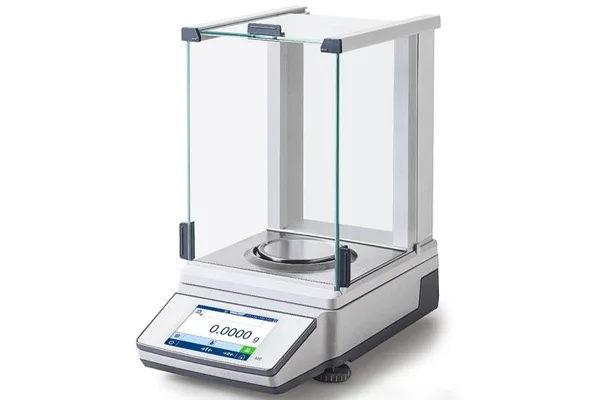
1) Analytical Balance (Readability: 0.1 mg / 0.0001 g)
Commonly used for the precision weighing of substances exceeding 100 mg, residue on ignition (crucibles), and loss on drying (weighing bottles).
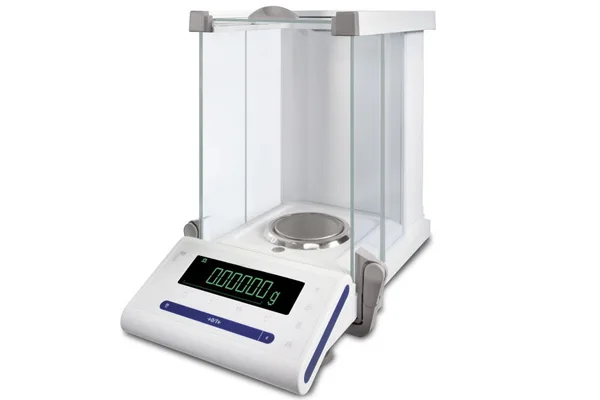
2) Semi-Micro Balance (Readability: 0.01 mg / 0.00001 g)
Commonly used for the precision weighing of substances between 10 mg and 100 mg.
3) Micro Balance (Readability: 0.001 mg / 0.000001 g)
Commonly used for the precision weighing of substances less than 10 mg.

2. Significant Figures in Weighing
The weighing of special samples requires specific techniques depending on their properties.
1) Precautions for Precision Weighing
When performing precision weighing, containers such as weighing bottles, small beakers, or volumetric flasks may be used. If the sample is weighed directly into a volumetric flask (taking care not to exceed the balance’s maximum capacity), do not insert the stopper due to concerns about air exposure or potential instability in the readings. The stopper should not be used before the final dilution to volume.
2) Weighing Special Samples
For highly hygroscopic or volatile samples, it is best to weigh them in a small weighing bottle, dissolve the substance, and then transfer the solution to a volumetric flask. Because a weighing bottle has a relatively wide opening, it prevents the sample from coming into contact with the rim. If necessary, the lid can be replaced during the weighing process to prevent unstable readings.
3) Handling Reagents and Chemicals Before Weighing
-
Solid chemicals are stored in wide-mouth bottles.
-
Liquid chemicals are stored in narrow-mouth bottles.
-
Gases are stored in gas collection bottles.
Conclusion
In summary, when using an analytical balance to weigh samples, inaccuracies can arise from uncalibrated equipment, environmental and physical influences of the samples, and non-standardized operational procedures. Precise weighing results have a significant impact on the accuracy of subsequent analytical data. Therefore, it is essential that these factors receive careful attention from all laboratory personnel.
At GenFollower, we are committed to supporting reliable laboratory workflows by providing cost-effective, high-quality laboratory consumables designed for routine analytical and research applications. If you are interested in our products or would like to learn more, please feel free to contact us.
Recent Posts

Common Techniques for Isolating Microorganisms on Solid Media
In the natural environment, microorganisms are seldom found in isolation; instead, they typically thrive within complex, multi-species consortia across diverse habitats, ranging from soil and aquatic ecosystems to the human gut. For researchers aiming to [...]
The Ultimate Guide to Agarose Gel Electrophoresis
Agarose gel electrophoresis is a standard technique used in molecular biology for the separation, identification, and purification of nucleic acids. Its operational simplicity and broad applicability make proficiency in this method a fundamental prerequisite for [...]

Weighing It Right: A Comprehensive Guide to Accurate Laboratory Weighing
Sample weighing is a critical component of analytical experiments, as inaccuracies can lead to the failure of the entire process. When weighing results are consistently inaccurate, it is essential to perform a thorough analysis [...]